Sentinel-1C: What Changed, What Stayed the Same, and What It Means for Your Pipeline
By Samuel Appiah Kubi · 08 Jul 2026
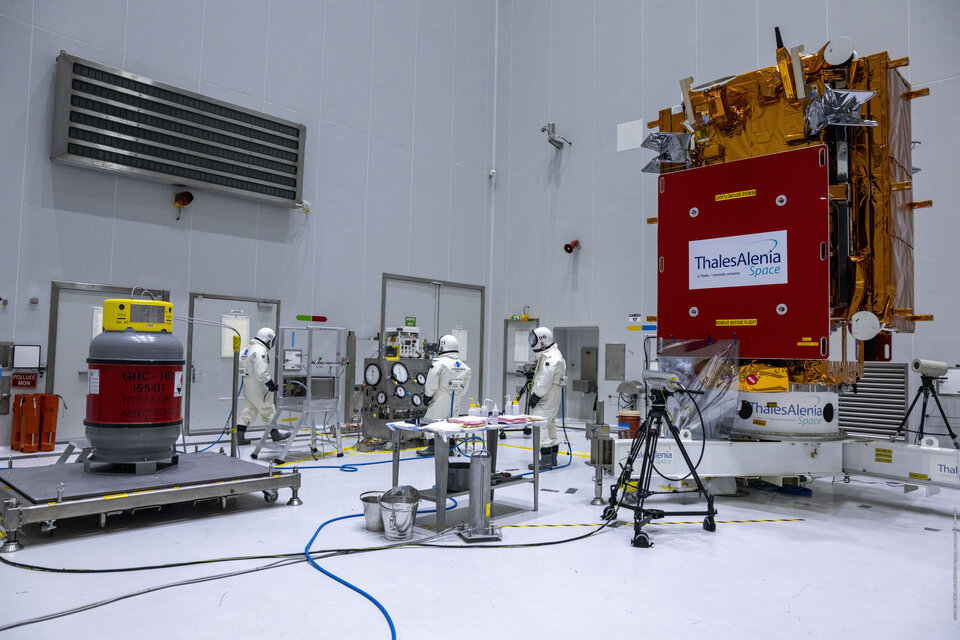
Sentinel-1A operations ended in early July 2026, completing its transition after over a decade of service. The active constellation is now Sentinel-1C (launched December 2024, operational May 2025) and Sentinel-1D (launched November 2025, data open April 2026). This post is a practical guide to what changed.
What Stayed the Same
The most important thing: the data format. Sentinel-1C and 1D produce GRD and SLC products in identical format to 1A and 1B. The C-band wavelength (5.405 GHz, λ = 5.546 cm), IW mode geometry, GRD product structure, band names (VV, VH), and SAFE package structure are unchanged. If your pygeovision or SNAP pipeline works on 1A data, it works on 1C and 1D data without modification.
What Changed
Platform name in STAC. The platform property in Sentinel-1C STAC items is "SENTINEL-1C", not "SENTINEL-1A". If your search code filters by exact platform name, update your filters. pygeovision's satellite='Sentinel-1' parameter searches the constellation-level collection and returns all platforms automatically.
RFI mitigation. Sentinel-1C includes on-board Radio Frequency Interference (RFI) mitigation — a dedicated processor that removes interference from ground-based radio transmitters. For most West African applications, this means slightly cleaner data, especially over urban areas near mobile tower clusters. The mitigation is applied before the GRD product is created — you receive cleaner data automatically with no processing change.
AIS antenna. Sentinel-1C carries an Automatic Identification System (AIS) antenna for ship detection. This is relevant for maritime monitoring applications but does not affect SAR processing workflows for land applications.
What to Update in Your Code
# Old (may miss S1C/D results if filtering by exact platform):
scenes = [s for s in results if s.satellite == 'SENTINEL-1A']

# New (get all constellation members):
scenes = [s for s in results if 'SENTINEL-1' in s.satellite.upper()]

# Or just use pygeovision's satellite parameter — it handles this:
scenes = client.search(bbox=..., satellite='Sentinel-1', ...)
# Returns S1A, S1B, S1C, S1D automatically
For historical time series extending back before May 2025, note that the constellation shift means your series contains a mix of 1A/1B and 1C/1D data. For most applications this is fine. For precise radiometric time series, consider adding the platform name as a covariate.